
Knife Sharpeners Explained: What Every Home Cook Should Know
Walk into a kitchen store or browse online, and you’ll find dozens of ways to sharpen a knife. Pull-through sharpeners, electric machines, whetstones, honing rods, diamond plates, guided systems, and professional sharpening services all promise a razor-sharp edge.
So which one is best?
The truth is that every sharpening method has strengths and weaknesses. Understanding how each works will help you choose the right option for your knives, your budget, and your skill level.
First: Honing vs. Sharpening
Many people think they’re sharpening their knives when they’re actually honing them.
A honing rod (sometimes called a sharpening steel) doesn’t usually remove much metal. Instead, it straightens the microscopic edge of the blade that bends during normal use.
Honing can make a knife feel sharper temporarily, but eventually the edge wears away and must be sharpened by removing metal and creating a new edge.
Think of honing as maintenance and sharpening as restoration.
In this video I teach you how to hone your knives:
Pull-Through Sharpeners
These are the small handheld sharpeners with slots that you drag the knife through.
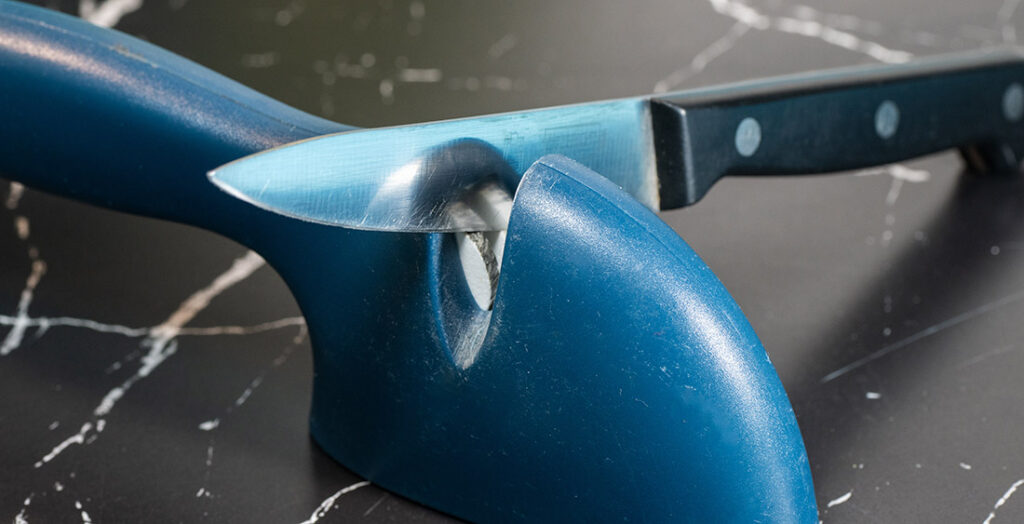
Pros
- Fast and easy to use
- Inexpensive
- No special skills required
- Convenient for occasional touch-ups
Cons
- Remove more metal than necessary
- Can create rough, uneven edges
- Shorten the life of expensive knives over time
- Limited control over edge geometry
Pull-through sharpeners are popular because they’re simple, but many knife enthusiasts avoid them for high-quality kitchen knives.
Electric Knife Sharpeners
Electric sharpeners use motorized abrasive wheels to sharpen the blade.
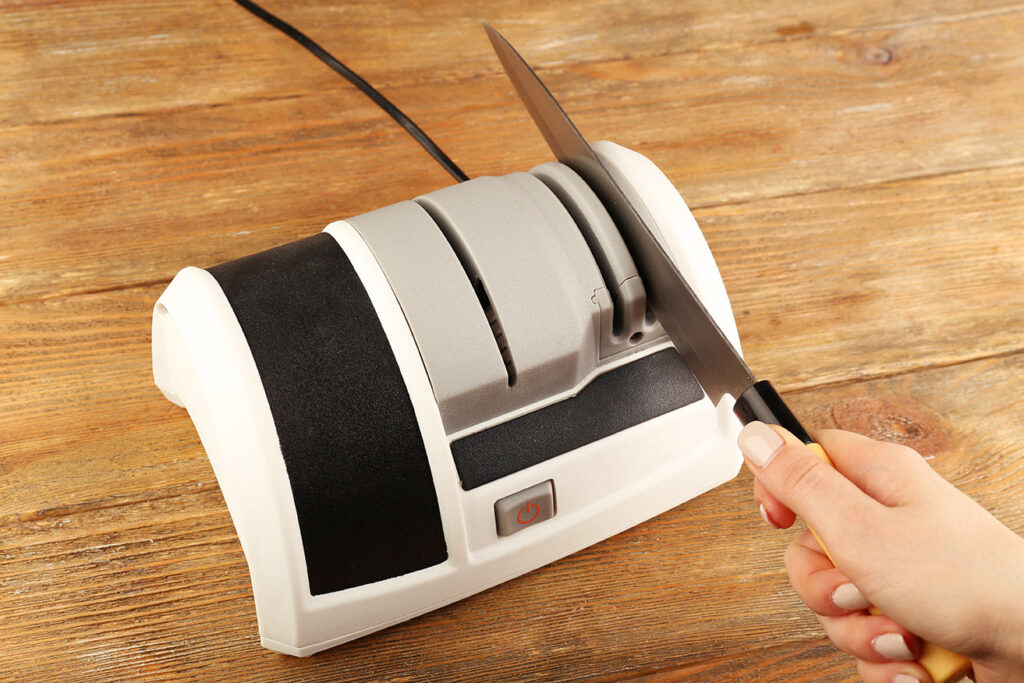
Pros
- Fast and convenient
- Consistent results
- Good for households with many knives
- Easy for beginners
Cons
- Can remove significant amounts of steel
- Some models generate heat at the edge
- Limited control over sharpening angles
- More expensive than manual options
A quality electric sharpener can work well, but it may not produce the same refined edge as a skilled hand sharpening.
Whetstones (Sharpening Stones)
Whetstones have been used for centuries and remain the favorite method for many knife enthusiasts.

Pros
- Excellent edge quality
- Complete control over sharpening angle
- Works on virtually any knife
- Minimal metal removal when used properly
Cons
- Requires practice and patience
- Takes longer than other methods
- Stones require maintenance and flattening
- Learning curve can be frustrating
For people willing to learn, whetstones can produce exceptional results. For many busy home cooks, however, the time and skill investment can be difficult to justify.
Diamond Stones and Diamond Plates
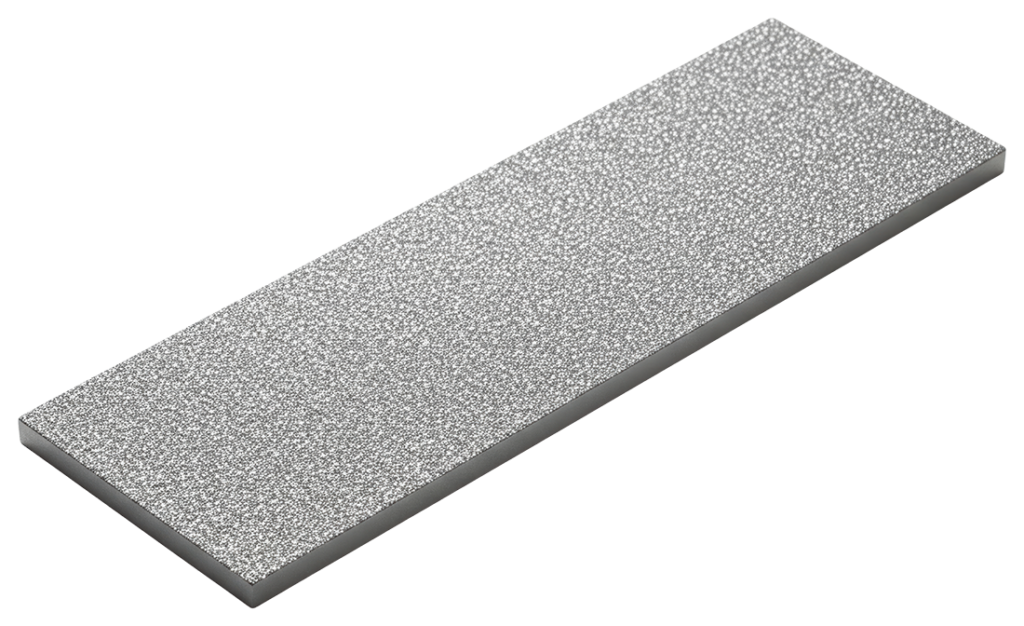
Diamond sharpeners use industrial diamonds bonded to a flat surface.
Pros
- Cut very quickly
- Stay flat longer than traditional stones
- Excellent for hard steels
- Durable and low maintenance
Cons
- Can be aggressive if used improperly
- Less forgiving for beginners
- Some users prefer the finish from traditional stones
Many professionals use diamond stones as part of their sharpening process.
Guided Sharpening Systems
Guided systems hold the knife or sharpening stone at a fixed angle.
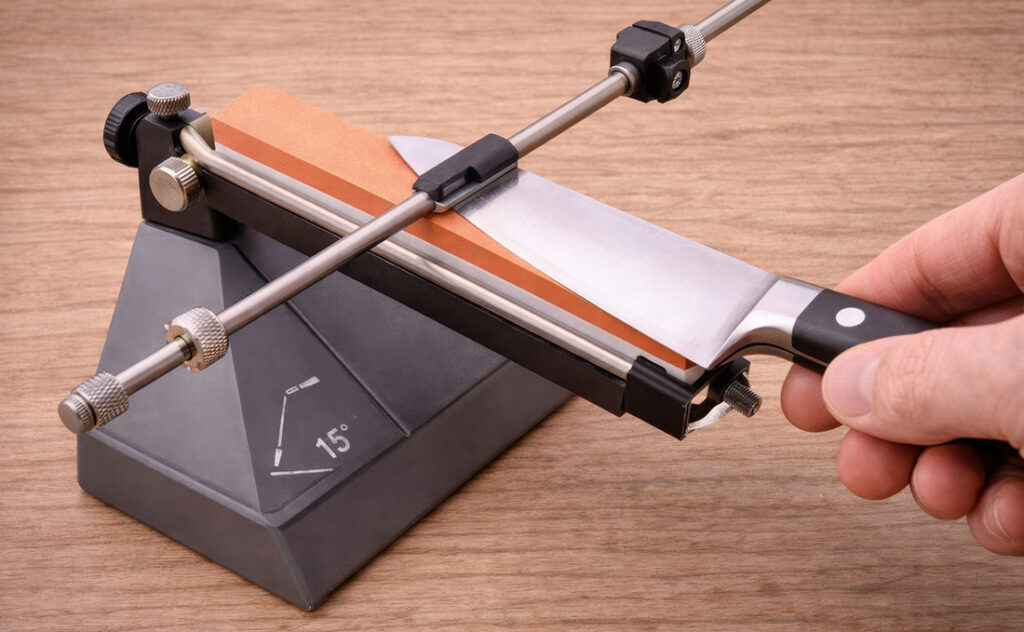
Pros
- Very consistent results
- Easier than freehand sharpening
- Good for beginners
- Can produce highly refined edges
Cons
- Slower setup
- More expensive
- Less practical for large numbers of knives
- Some systems have blade size limitations
These systems are popular among knife collectors who want precise control without mastering freehand sharpening.
Professional Sharpening Services
Professional sharpeners use a variety of methods, including belts, stones, diamond systems, and water-cooled grinding wheels.
Pros
- No learning curve
- Consistent results
- Saves time
- Ideal for expensive knives
- Can repair chips, broken tips, and damaged edges
Cons
- Costs more than doing it yourself
- Requires finding a skilled sharpener
- Some services use aggressive methods that remove excessive steel
Not all professional sharpening services are the same. The equipment used and the skill of the sharpener make a significant difference.
What Is Water-Cooled Sharpening?
Some professional sharpeners use a water-cooled grinding wheel. Water constantly cools the blade during sharpening.
Why It Matters
Knife steel can lose hardness if it becomes overheated. Water cooling helps prevent heat buildup at the edge while producing a precise, clean bevel.
Benefits
- Minimal risk of overheating the blade
- Gentle on quality knives
- Precise edge geometry
- Excellent edge finish
- Less steel removal than many high-speed systems
This method is especially popular for premium kitchen knives, woodworking tools, and knives that owners want to keep for many years.
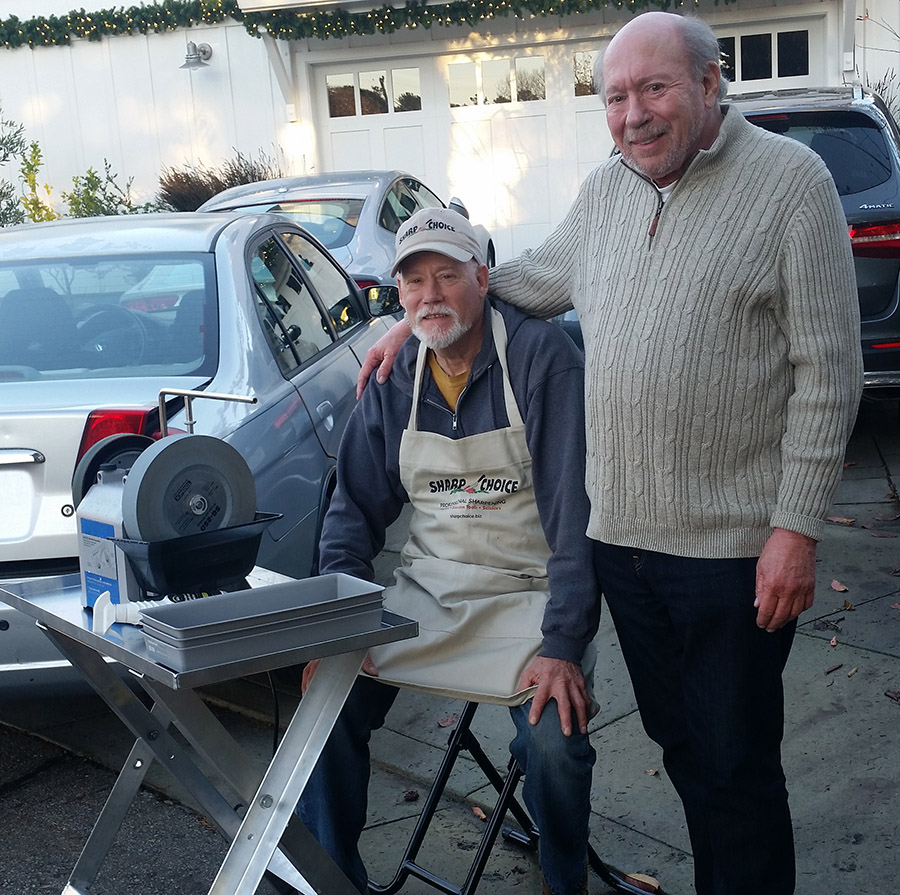
This is what I use here at SharpChoice and you can see a picture of me below with my water-cooled grinding wheel.
So What’s the Best Choice?
The best sharpener depends on your goals.
- If you want the quickest solution, a pull-through or electric sharpener may work.
- If you enjoy learning a skill and want maximum control, whetstones are hard to beat.
- If you want consistent precision, guided systems are excellent.
- If you simply want your knives professionally sharpened without the learning curve, a reputable sharpening service can be the most convenient option.
A sharp knife is safer, more enjoyable to use, and makes cooking easier. No matter which sharpening method you choose, maintaining a sharp edge will improve your experience in the kitchen far more than buying another knife.
Need Your Knives Professionally Sharpened in the Santa Cruz area?
If your kitchen knives have become dull, struggle to slice tomatoes, crush herbs instead of cutting them, or simply don’t feel safe to use anymore, professional sharpening can restore them to better-than-new performance.
At SharpChoice, we use a professional water-cooled sharpening system that continuously bathes the grinding wheel in water during the sharpening process. This keeps the blade cool, protects the steel from heat damage, and allows us to create a precise, long-lasting edge while removing as little metal as possible.
Unlike high-speed grinders that can overheat an edge in seconds, water-cooled sharpening is gentle on your knives and ideal for everything from everyday kitchen knives to premium chef’s knives, Japanese blades, hunting knives, and specialty cutlery.
As a local mobile sharpening service, we bring professional sharpening directly to your neighborhood. No shipping. No waiting weeks for your knives to come back. Just sharp, safe, high-performing knives ready for your next meal.
Call SharpChoice today and discover how much easier cooking becomes with a properly sharpened knife.
To schedule, call or text (831) 334-4556
- I come to you. All I need is a place to park my car, an outlet to plug into, and a minimum of $40.
- House calls need to be within 8 miles of Nob Hill in Capitola. I can drive further for a minimum $70.
SPECIAL! Get 2 free!
Get at least 4 neighbors to sign up on the same trip with a minimum of 8 items between them (in addition to your own), and you get 2 sharpened for free!